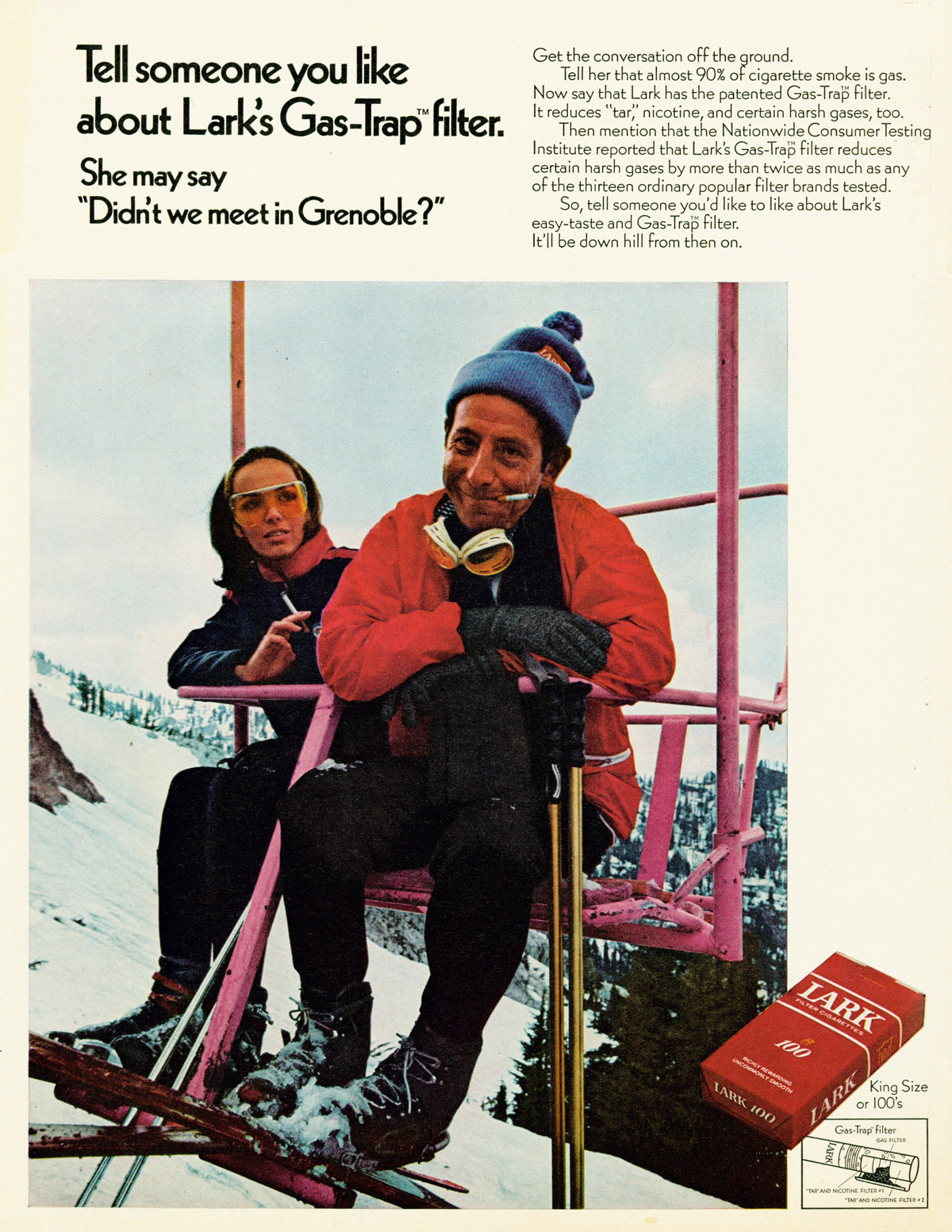
This advertisement shows an older man hitting it off with a young, beautiful woman after offering her a Lark cigarette on the ski lift. A pack of Larks is tucked into the brim of his hat as he looks into the camera with a satisfied grin, cigarette between his thin lips. His ski goggles hang around his neck in a way that resembles a gas mask, subliminally signaling the efficacy of the Lark “Gas-Trap filter.” The copy text emphasizes that Lark cigarettes are less harmful than other cigarettes because of this filter. Their slogan, “Tell someone you like about Lark’s Gas-Trap filter” implies that you will be doing someone a service – keeping her healthy – if you tell her about Lark’s “effective” Gas-Trap filters. The filter is advertised as extremely advanced, with a claim that it “reduced certain harsh gases by more than twice as much as nay of the thirteen ordinary popular filter brands tested.” The emphasis on science and advancement is crucial. The pristine white skies and snowy mountains, coupled with the concept of fresh mountain air and being suspended in the sky all correlate with the supposed “purity” of a filtered cigarette. The man and woman also appear to be in good health, skiing up in the mountains and staying active. The health claims featured in this campaign which began in 1968, resulted from spurious FTC studies which indicated that that lower mortality rates were associated with lower tar and nicotine levels. These studies led to a 39 percent decline in the average tar yield of cigarettes between 1968 and 1981 (http://tobaccodocuments.org/rjr/506613461-3570.html page 36).

SRITA
Stanford Research into the Impact of Tobacco Advertising
Footer
